Techniques of Teaching: Seize the time, and you'll forget about time! Discussing deliberate time pressure!


Last month in the "Professional Presentation Skills" course, Joe, who is of an introverted nature but often needs to present in front of others, also enrolled in this course. After the course ended, he wrote me a lengthy letter, discussing not only his learning experiences during the course but also highlighting a problem he encountered:
"The pace of the course was extremely tight, and everyone was under immense pressure! You kept a close watch on every second and kept counting down! After the class was over, a few of us, who are usually prone to nervousness, ended up with stomach aches! Can future courses be lengthened and more relaxed?"
After reading his feedback, I smiled and responded, "It's my fault if the class caused you to have a stomach ache! However, the time pressure and pace pressure... were intentional!"
"Intentional! Why?" Riding on this curiosity, I took the time to explain. But before that, I asked Joe a few questions:
"Did you feel sleepy or doze off during the course?" I asked.
"Are you kidding! My brain was nearly overheating trying to keep up with the intense concentration required!"
I then asked, "Did you check your phone or emails during the course?" He shook his head and gave me a wry smile, implying that he wished he had the time to check his phone!
For the last question, I asked, "When it was time to send people on stage for practice, did you hesitate?" He thought for a moment and said, "Because the timing was so tight, we didn't have time to think carefully, and everyone rushed on stage! So it seems we didn't think too much about it!"
The Typical Course
Certainly, most courses progress smoothly (or slowly), with not too much pressure. That is, you might only need half, or even less, of your attention to keep up with the teacher's pace. This also means that participants will have plenty of time to daydream, think about work, surf the internet, reply to messages, or observe what others are doing. If the pace gets even slower, some people will start dozing off!
However, if you can tighten the time and pace of the course, even deliberately create a bit of time pressure, it will require participants to be fully invested to complete the tasks set by the teacher. Once such a pace is established, you will find that participants have no time to daydream, feel sleepy, or scroll their phones. Coupled with some teaching techniques and solid content from the teacher, you can even induce a state of flow: Under intense time pressure, participants can forget the passage of time! Even though every discussion is time-bound, after a full day's course, participants may feel that time has flown by, even forgetting the passage of time.
Accelerating Techniques
Of course, achieving such a state is not that simple. The following points can help teachers create time pressure for the course and accelerate the pace:
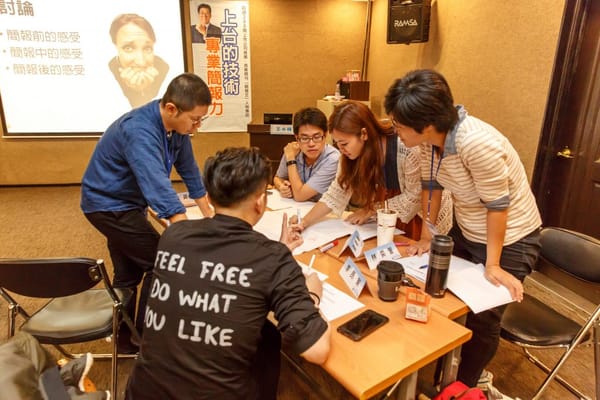
1. Control the time during discussions or practices, opting for tightness over looseness. This is something we've discussed in group discussion and practice methods. In addition to keeping track of time, teachers should actively countdown, reminding students of the passage of time. Moreover, the accompaniment of music can also create a more compact atmosphere.
2. Continuously changing teaching techniques: Another aspect of course rhythm is the constant switch in teaching techniques – one method following another, one discussion after another, one practice after another. Teaching methods transition seamlessly, yet still adhering closely to the course theme. Constant lecturing can indeed feel slow, but continuous practice can feel tiresome. Therefore, each method shouldn't be used to exhaustion, but rather design different teaching methods to switch continuously during the process. But remember: don't deviate from teaching objectives! The focus should always be on learning outcomes, not on the methods. We'll talk more about this in future course design!
3. Fundamental changes in the teacher's concept: Some teachers may believe that learning quickly equates to being superficial. We'll not discuss this point now, but let me shift the perspective: Does slow learning necessarily lead to depth? Perhaps due to the nature of corporate training, most courses are required to be completed within a day! Therefore, we don't have time to drag, and learners expect to apply what they learn immediately! In practice: for instance, in MJ's digital literacy course, you can master financial statements, which could take four academic years to learn, in just one day, and even apply them! Within a day, you can learn innovative thinking (with Adam), impactful speaking & coaching good helpers (with Xian Ge), becoming a storytelling & quote-writing king (with Mars Grandpa), and much more. Numerous corporate trainers can greatly transform learners in just a day. So, stop saying the course is too short or too rushed, and think: Is your course rhythm brisk enough? Have you leveraged time pressure to focus participants' attention?
Postscript
After these explanations, Joe finally understood that all the course pressure & timing was intentionally orchestrated by the teacher! The goal is to have everyone forget the pressure of performing tasks on stage under the strain of time. Because while constantly monitoring the timing of each discussion, they could forget the time of the entire course! After the course, Joe once again magnificently transformed himself, achieving better results on the presentation stage, helping his organization gain higher exposure worldwide. Beyond pressure, this is the true meaning of learning, isn't it?
Note: Writing this kind of article, imbued with a sense of time pressure, while on the island of Bali, in a slow vacation rhythm, is indeed a unique experience!